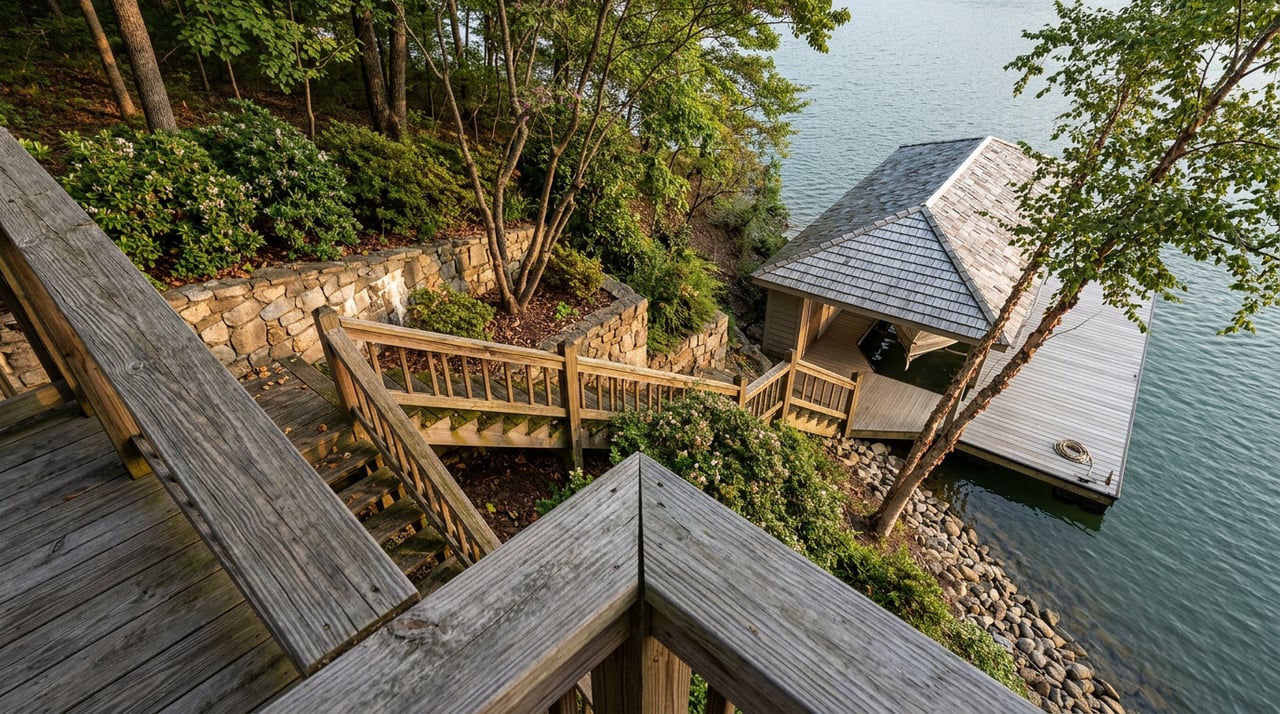
The gauge at Hartwell Dam has read somewhere between 652 and 653 feet above sea level for most of this summer, eight feet under the lake's full pool mark of 660. That number alone tells you almost nothing useful. It doesn't tell you whether the ramp at your usual put-in still floats a boat, whether the marina you eat dinner at twice a month is still running its Saturday specials, or whether the cove your kids have been jumping off the dock into since June is still deep enough to jump into. Eight feet sounds uniform. On the actual lake, it isn't. Some parts of Hartwell have effectively closed for the season. Others haven't noticed the drought at all.
That split, not the number on the gauge, is the thing worth understanding if you live here.
Why This Drought Feels Different
Locals who've been on Hartwell a while will tell you low water in winter is normal. The Corps of Engineers draws the lake down seasonally, then spring rain brings it back before summer boating season starts. That didn't happen this year. The Army Corps has pointed to a roughly 30-inch rainfall deficit across the upper Savannah River basin dating back to January 2025, and the lake never got its usual refill. It sat more than seven feet below full pool heading into Memorial Day weekend, and the most recent readings in early August put it in almost the same place.
That plateau matters because of a specific threshold. The lake enters what the Corps classifies as Drought Trigger Level 2 once it drops to or below 654 feet. Hartwell crossed that line back in the winter and has stayed under it ever since, which is the operational reason ramps have been closing one at a time all year instead of a single dramatic announcement. The lake isn't in crisis. It's just been stuck below the line that triggers ramp-by-ramp caution for eight straight months.
The Ramps That Actually Closed, and Where
Here's what that's meant in practice since January. The closures have landed almost entirely on the shallow, campground-style ramps rather than the deep marina channels:
- Reed Creek, off Sarijon Road, closed and remains shut until further notice
- Rocky Ford, managed by Hart County, closed after being deemed unsafe to launch from
- Durham, Hattons Ford (left lane), Springfield Campground, and Townville, all in Anderson County, closed earlier in the year
- Tabor and Oconee Point Campground, in Oconee County, also closed
- Jenkins Ferry on the Georgia side hasn't fully closed, but its right lane has been shut since January, leaving boaters the left lane only
That last one is worth sitting with. Jenkins Ferry Park, in Stephens County, is also one of the three Georgia recreation areas the Corps just confirmed will open for hunting on September 12 as part of the 2026-2027 season, alongside Hart County's New Prospect Park. So the same patch of ground at Jenkins Ferry is simultaneously half-closed for boaters and about to open for hunters. That's the real shape of this drought. It isn't shutting the lake down. It's sorting which activity a given piece of shoreline still supports.
If you're planning to launch anywhere you haven't been since spring, the Corps keeps a running list of current ramp closures on its Hartwell Lake boating page, and it's worth a check before you hitch the trailer.
The Marinas Haven't Missed a Beat
While campground ramps have been closing all year, the lake's marinas have kept running full calendars. Big Water Marina hosted its annual Freedom Celebration on June 27, complete with a fireworks show and live music that's continued at J.R. Cash's Grill & Bar every weekend since. Families still bring kids 46 inches and taller to the Wibit obstacle course at Splash Island there. Up at Portman Marina, The Galley Restaurant is still serving its usual seafood, steak, and patio seating on the northern end of the lake, and The Grill at Clemson Marina in Seneca hasn't changed its casual American menu either.
None of that is an accident of timing. Marinas sit in the deepest, most actively maintained channels on the lake, the parts least likely to go skinny even when the shoreline coves do. A ramp built for a specific water elevation at a campground can strand a trailer in mud that a marina slip never will. That's the practical reason your dinner reservation and your boat ramp are having two completely different summers.
As Corps park ranger Annette Dotson put it back in May, when the lake was already sitting more than seven feet below full pond heading into the holiday weekend:
"If you have that favorite cove that you've always played in before, it may not be there now. It could be dry."
She wasn't talking about the lake in general. She was talking about the specific, personal geography every regular boater on Hartwell carries around, the cove, the sandbar, the spot behind the point where you always anchor. That's the map that's actually changed this year. The lake as a whole is still very much open.
The Calendar Didn't Get the Memo
None of this has touched the parts of Hartwell life that don't depend on ramp depth. The Western Carolina Sailing Club, based in Anderson, has been racing on the lake for more than 60 years, and its calendar runs on wind, not water elevation. Its Bloody Mary Regatta, one of six stops in the Thistle Southeast Series, ran October 26-27 in its most recent edition, and the club's other fall fixture, the Hospice Regatta benefiting Hospice of the Upstate, has also run in October in past years. Sailboats don't need a boat ramp. They need open water, and Hartwell still has plenty of that even eight feet down.
The hunting calendar is proceeding on its normal schedule too. Beyond Jenkins Ferry Park and New Prospect Park, the Corps' Hartwell Lake Project Office is opening ten recreation areas total across both states for the 2026-2027 season starting September 12, seven of them in South Carolina and three in Georgia. In Georgia, the Hartwell Dam Quarry Area in Hart County allows archery only, and the free permit required to hunt there is available at the Hartwell Lake Visitors Center on Highway 29.
Put the boating disruptions next to the calendar that isn't disrupted at all, and the picture gets clearer. The drought is a hydrology story, not a lifestyle story. It changes which ramp you use. It hasn't changed what there is to do here.
What This Actually Means for Your Next Few Weekends
If you live on or near Hartwell right now, the useful move isn't tracking the lake level in the abstract. It's knowing which category your plans fall into:
- Launching from a campground-style Corps ramp? Check the current closure list before you drive. Reed Creek and Rocky Ford are both out indefinitely, and a handful of Anderson and Oconee County ramps have been closed since winter.
- Meeting friends at a marina? Big Water, Portman, and Clemson Marina have all run their normal summer programming without interruption, and there's no sign that changes into fall.
- Sailing, hunting, or anything that doesn't need a boat ramp? The fall calendar, from the sailing club's regattas to the September 12 hunting openings, is unaffected.
- Chasing a specific cove or sandbar from memory? Treat it as unconfirmed until you've seen it this season. Trees, drop-offs, and shallow spots that weren't hazards at full pool can be right at the surface now.
None of this requires a real estate decision. It requires knowing your own lake a little better than the gauge reading tells you, which is the same local instinct that makes the difference between a good Saturday here and a wasted trip to a ramp that's been closed since July.
If you're the kind of person who tracks the lake this closely, whether you're already living on it or thinking about the day you might, that's exactly the kind of hyperlocal read the team at Dalco Properties builds into everything we do around Hartwell. Reach out and we'll put you on the list to be the first to see it.